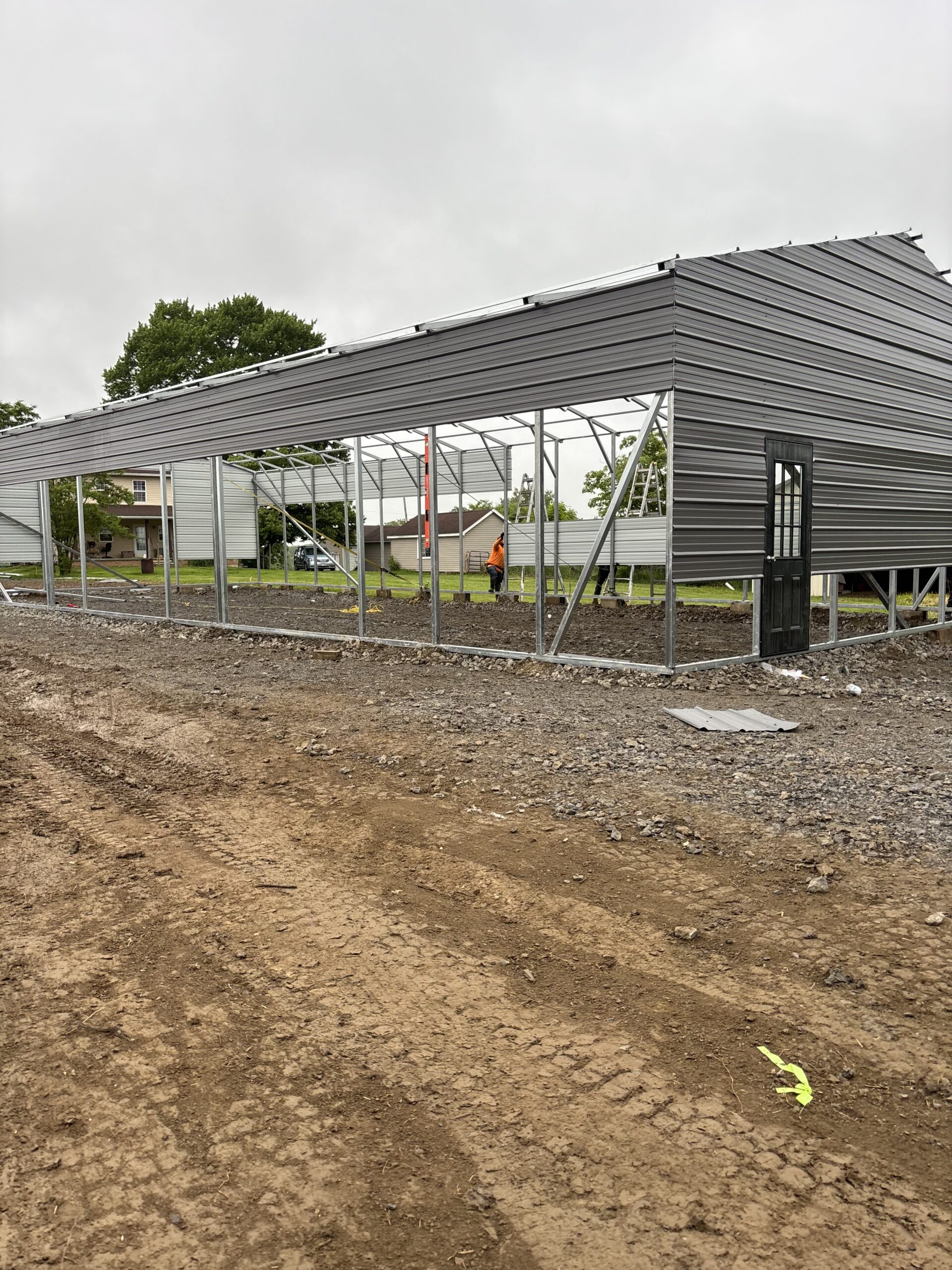
If you are planning a metal building on a concrete foundation, you will hear the term “frost depth” or “frost line.” It sounds like a technical detail, but it is one of the most important parts of a foundation that lasts. Get it wrong and your slab can crack, your building can shift, and your doors may stop closing right.
Here is a plain-English look at what frost depth is, why it matters, and how to find out what it is where you live.
What frost depth means
Frost depth is how far down into the soil the ground freezes during a typical cold winter. Above that line, the soil freezes and thaws. Below it, the ground stays above freezing all year.
Frost depth varies a lot from place to place. It depends on your climate, elevation, and local soil. A mountain county can have a deeper frost line than a county a short drive away in a valley. That is why there is no single number that works everywhere.
Why freezing ground causes problems
Soil holds water. When that water freezes, it expands. As it expands, it pushes up on anything sitting on top of it, including concrete. This is called frost heave.
Then the ground thaws, and the soil settles back down, but not always evenly. Over a few winters, that up-and-down movement can:
- Crack slabs and footers
- Lift one corner of a building more than another
- Throw roll-up doors and walk-in doors out of square
- Loosen anchors and fasteners
- Let water get under the slab and make the problem worse
Why footers go below the frost line
The fix is simple in principle: put the footers deep enough that they sit in soil that does not freeze. When footers are poured below your local frost depth, the frozen soil above them cannot push them up. The footers stay put, and the building stays square.
That is why we pour footers below the local frost depth on every job. It is a standard part of how we build foundations, not an extra. You can read more about our process on the concrete foundations page.
How to find your local frost depth
Do not guess and do not go by what someone told you about a different county. The right answer comes from your local building office. Here is how to find it:
- Call your county building or permit office. They can tell you the required footer depth for your area. This is the most reliable source.
- Check your permit requirements. If your building needs a permit, the frost depth requirement will usually be part of the foundation rules.
- Ask your contractor. A good contractor should know the local requirement and confirm it with the county before pouring.
If you are in Virginia, our post on permits in Virginia is a good starting point for working with your county. For other states, the process is similar: your county or city building department has the final word.
Other things that help a foundation handle cold weather
Frost depth is the big one, but it is not the only thing that keeps a foundation healthy through the winter.
Drainage
Water is what makes frost heave possible. Grading the site so water drains away from the building, and not toward it, cuts down on the moisture available to freeze. Good site prep matters here.
Compacted base
Loose fill settles over time. A properly compacted base under the slab helps keep it flat and supported.
Vapor barrier
A vapor barrier under the slab helps keep ground moisture from coming up through the concrete. That helps with condensation inside the building, too.
Control joints
Concrete shrinks as it cures and moves a little with temperature. Control joints give it a planned place to crack, so you get neat lines instead of random cracks across the floor.
What about carports on the ground?
Some open carports are installed on the ground or on gravel with anchors, not on a full slab. That can work for certain uses. But if you want a permanent garage or shop with a concrete floor, the footers and frost depth matter. Talk with us about what fits your plans and what your county requires.
The bottom line
Frost depth is just the depth where the ground stops freezing. Footers below it stay stable. Footers above it can heave and crack. Always confirm your local frost depth with your county building office before anyone pours concrete.
Not sure what you need? Look up any term in our glossary, check our service area, or reach out.
Call or text John at 276-235-1191, or send us your project through the contact form. We’ll look at your site and quote the foundation and building together.
Common Questions
What is the frost line?
The frost line, or frost depth, is how far down the ground freezes in a typical winter. Soil below that line stays above freezing year round.
How deep should my footers be?
Footers should sit below your local frost depth. That depth varies by area, so confirm the requirement with your county building office before pouring.
What is frost heave?
Frost heave happens when water in the soil freezes and expands, pushing concrete up. When it thaws, the ground settles unevenly, which can crack slabs and throw a building out of square.
Do you pour footers below frost depth on every job?
Yes. Footers poured below the local frost depth are a standard part of how we build concrete foundations.
Ready to price your building?
Call or text 276-235-1191, or send us the size, location and what it is for. We will come back with a real number.
Leave a Reply