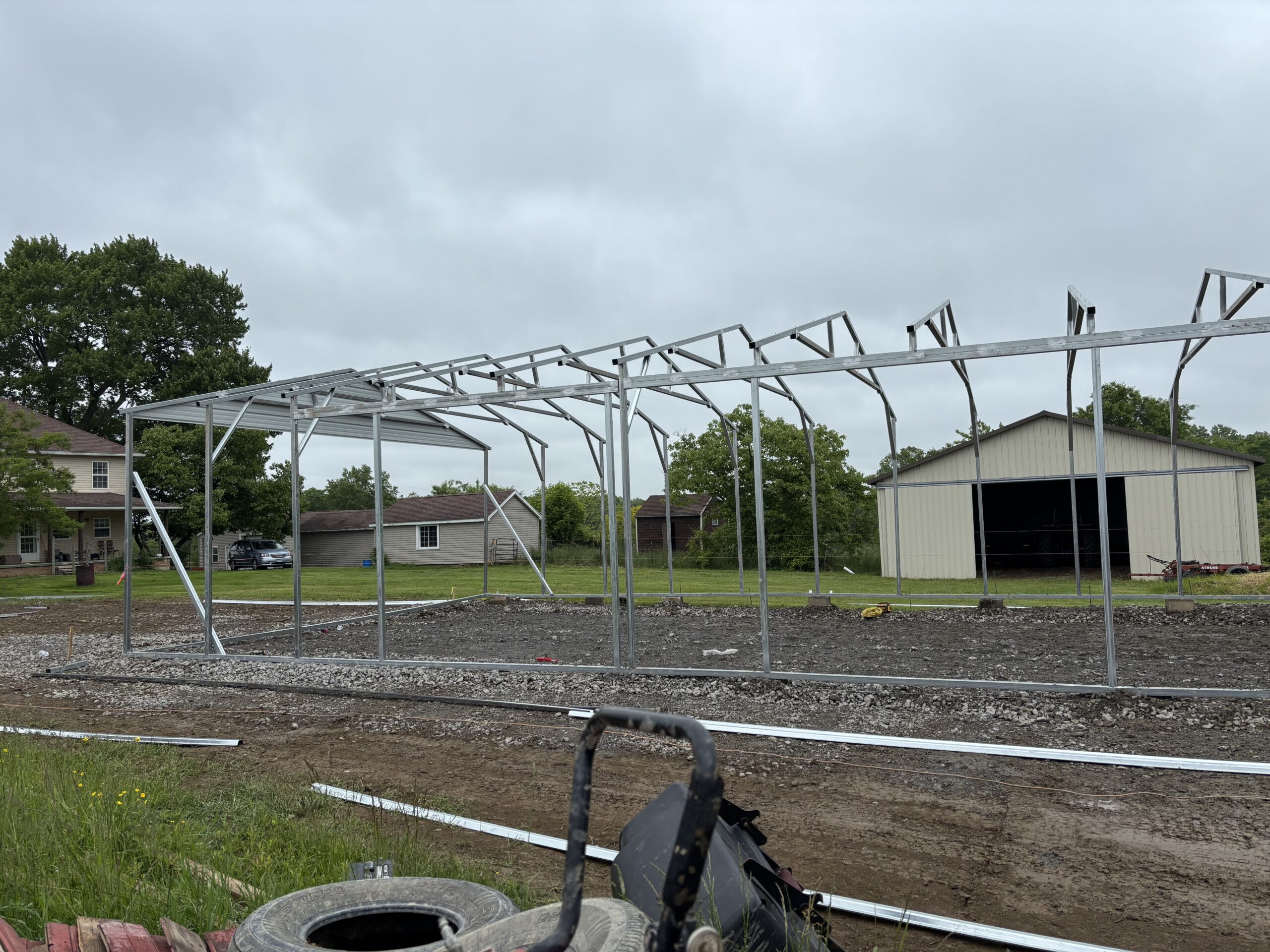
When you shop for a metal building, you will see the word “certified” a lot. Some companies say it loud and clear. Others skip over it. It is worth slowing down on, because the load rating is what decides whether your building rides out a storm or ends up in the neighbor’s field.
What a load rating is
Every building has to handle forces pushing on it. For a metal building, the two big ones are:
- Wind load: the force of wind pushing on the walls and trying to lift the roof. Wind does not just push; it pulls up on the roof, too, the same way it lifts an airplane wing.
- Snow load: the weight of snow and ice sitting on the roof. Wet, heavy snow can weigh far more than people expect, and drifts can pile up on one side.
A wind and snow load rating tells you how much of each force the building is engineered to handle. Ratings vary depending on the building’s design, framing, and how it is anchored.
What “certified” means
A certified building has been engineered to meet specific wind and snow loads, and that design is backed by engineered drawings. Those drawings show how the frame, bracing, and anchors work together to meet the rating.
Our buildings are certified for local wind and snow loads, and engineered drawings are available. That matters for two reasons: safety, and paperwork.
Why it matters for safety
A building that is not designed for your area’s conditions can rack in high wind, lose roof panels, or bow under snow. The weak point is often not the panels themselves but the connections, the frame spacing, and the anchors.
Certified buildings may use closer frame spacing, extra bracing, or heavier framing to meet the rating. You might not notice the difference standing inside on a calm day. You will notice it during the first big storm.
Why it matters for permits
Many counties require a permit for a metal building, and the building office may ask for engineered drawings that show the building meets local wind and snow loads. If your building is not certified, you may have trouble getting a permit, or you may be asked to make changes after the fact.
Load requirements vary by county. The right source for your area is your county building office. Call them before you buy and ask what wind and snow loads apply to your address.
Roof style plays a part
How a roof sheds snow and water also matters. On a vertical roof, panels run from the peak down to the eave, so snow and rain slide right off instead of sitting in the grooves. That is a big reason the vertical roof is about 80% of what we sell, and why we recommend it for areas with real winters and for enclosed or longer buildings.
How anchoring fits in
A rating means nothing if the building is not tied down properly. Anchors connect the frame to the foundation, whether that is a concrete slab, footers, or the ground. The right anchor depends on what the building is sitting on. When we install a building, it is delivered, set, anchored, and checked before we leave.
Questions to ask any metal building company
- Is this building certified for the wind and snow loads in my county?
- Can I get engineered drawings for my permit?
- What changes were made to meet the rating, like frame spacing or bracing?
- What anchors will you use, and what are they going into?
- Is the foundation designed to work with the building’s rating?
If a company cannot answer these plainly, keep shopping. Our post on how to vet a metal building company covers other red flags to watch for.
Certified vs not certified: a quick look
| Certified building | Non-certified building | |
|---|---|---|
| Engineered for local loads | Yes | Not verified |
| Engineered drawings | Available | Usually not |
| Permit-ready | More likely | May be rejected |
| Peace of mind in storms | Designed for it | Unknown |
Does certification cost more?
It can. Extra bracing and heavier framing add steel. But the cost of a building failing, or a permit being denied, is far higher. We’d rather quote you the right building than a cheaper one that does not fit your area. You can see the types of buildings we offer on our metal buildings page.
Get the right building for your area
Tell us where the building is going and what you’ll use it for. Call or text John at 276-235-1191, or start a quote with our quote builder. We’ll quote it to your local loads.
Common Questions
What does certified mean for a metal building?
It means the building is engineered to meet specific wind and snow loads, backed by engineered drawings that show how the frame, bracing, and anchors meet the rating.
How do I know what wind and snow loads my area needs?
Call your county building office. Requirements vary by location, and they can tell you what applies to your address.
Are your buildings certified?
Yes. Our buildings are certified for local wind and snow loads, and engineered drawings are available.
Will I need engineered drawings for a permit?
Many counties ask for them. Check with your county building office, and let us know so we can provide drawings for your building.
Ready to price your building?
Call or text 276-235-1191, or send us the size, location and what it is for. We will come back with a real number.
Leave a Reply