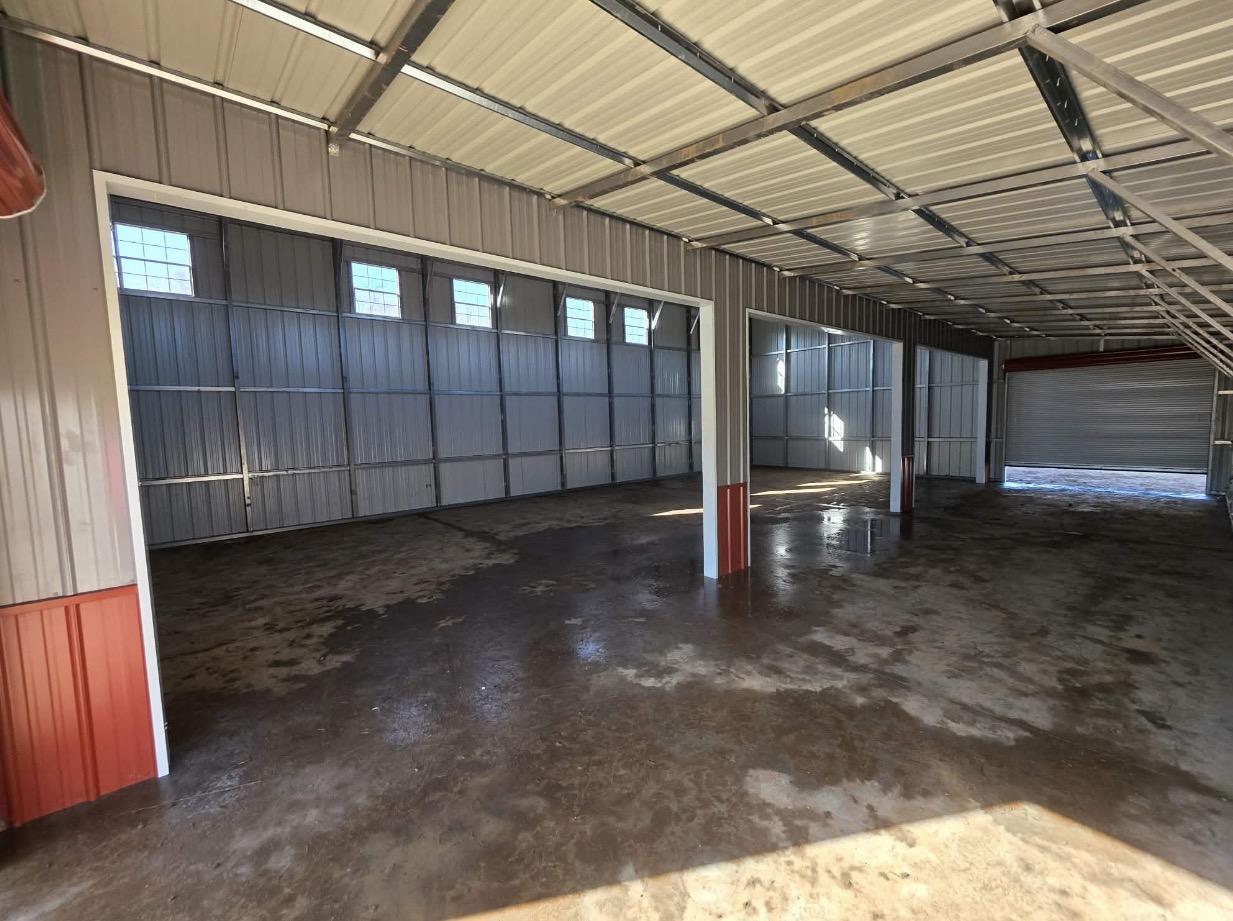
There is no single magic number, but the first week matters most. Concrete keeps getting stronger for weeks after the pour. Industry guidance says to keep new concrete moist and above 50°F for at least the first 3 to 7 days, and concrete strength is normally specified at 28 days. When your metal building can go up depends on the weather, the mix and the anchors. Anchors cast into the wet concrete are already in place, while adhesive (epoxy) anchors should not go into concrete younger than 21 days under the ACI building code. Always check your building’s anchor specs.
TL;DR:
- Curing means keeping new concrete moist and warm so it can gain strength. Drying is a different thing and takes much longer.
- Curing should run at least 3 to 7 days. Concrete that dries out early can lose as much as half its potential strength.
- Design strength is measured at 28 days. 7-day tests are used to check how strength is coming along.
- Cold slows everything down. Fresh concrete has to be kept from freezing until it reaches about 500 psi, roughly two days after placement.
- Anchors set in the wet concrete are the simplest. Adhesive anchors need concrete at least 21 days old under ACI 318.
We pour the footers and slabs and set the buildings on them, so we get this question on almost every job. Here is what controls the timing and how to tell when a slab is ready for a steel building.
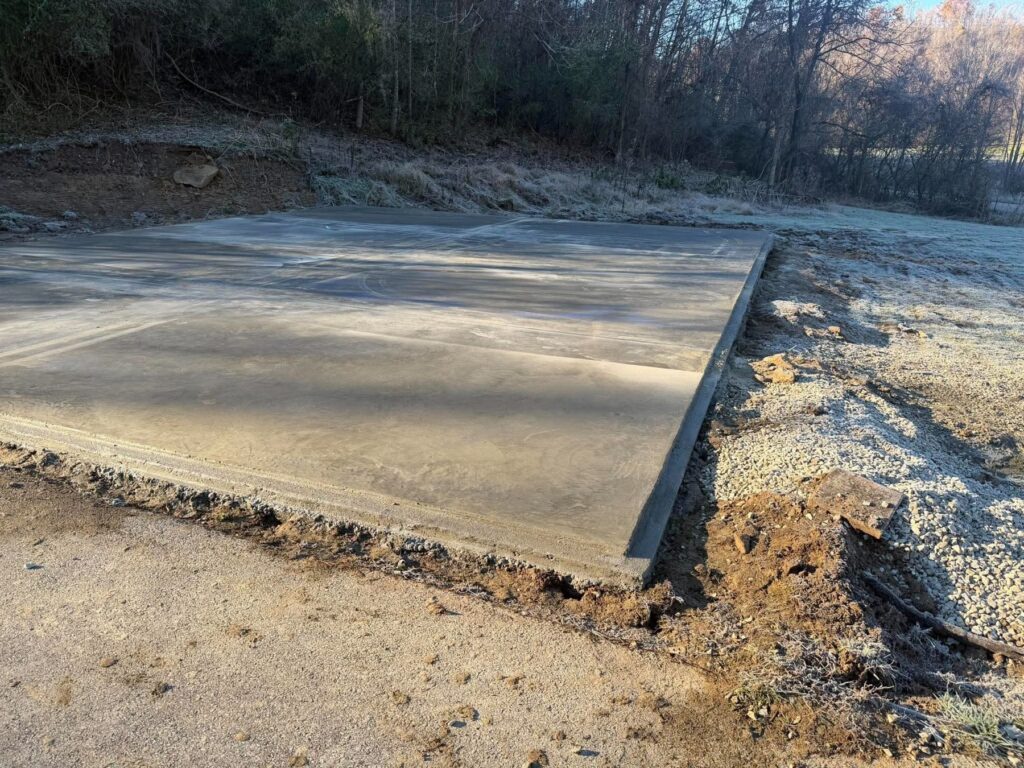
Curing vs. drying
People use these words like they mean the same thing. They do not.
Curing is keeping the new concrete at the right moisture and temperature so the cement keeps reacting with water. That reaction, called hydration, is what makes concrete hard and strong. The National Ready Mixed Concrete Association (NRMCA) says curing starts right after placing and finishing and should go on for 3 to 7 days, or as long as the job’s spec calls for.
Drying is the water slowly leaving the slab. That matters mostly if you plan to glue down flooring or coat the floor. NRMCA notes it can take weeks to months for a slab to dry to the level flooring makers want. A slab can be strong enough to build on long before it is dry enough for an epoxy coating.
Here is the key point: drying out too early is bad for strength. Concrete left to dry can lose as much as 50 percent of its potential strength compared with concrete that was kept moist, according to NRMCA.
7-day and 28-day strength
Concrete is ordered by strength, in pounds per square inch (psi). NRMCA says residential concrete can be around 2,500 psi, and commercial work often runs 4,000 psi and up.
The American Concrete Institute (ACI) says the specified strength is based on 28-day test results. Tests at 3 or 7 days are used to watch early strength gain, not to accept the concrete. The American Cement Association (formerly the Portland Cement Association) says most of the strength gain happens in the first month, and concrete keeps hardening slowly for years after that.
So a slab at one week is well on its way, but it is not at full design strength yet. How far along it is depends on the conditions below.
What controls how fast concrete cures
- Temperature. Warm concrete gains strength faster. Cold concrete is slow. NRMCA says new concrete should be kept above 50°F, and a 20°F drop in concrete temperature roughly doubles setting time.
- Moisture. The cement needs water to keep reacting. Plastic sheeting, curing compounds, wet burlap or a fine spray all help keep it in.
- The mix. Cement type, how much water was added and admixtures all change the timing. Accelerators and high-early-strength cement speed things up. Fly ash and slag cement can slow early strength gain in cold weather. Adding extra water at the truck to make the concrete easier to work weakens it.
- Thickness. Thin sections lose heat faster. Corners and edges are the first to get cold.
Cold weather concerns
Winter pours are common in the mountains, and they can turn out fine with planning. NRMCA defines cold weather as more than 3 days in a row with an average temperature below 40°F, and air temperature no higher than 50°F for more than half of any day.
- Fresh concrete freezes below about 25°F. Concrete that freezes early can lose more than half its potential strength and will not be durable.
- It should be protected from freezing until it reaches at least 500 psi, which NRMCA puts at about two days after placement.
- Insulated blankets hold in the heat the concrete makes on its own. Water curing is not recommended when freezing temperatures are coming.
- Expect everything to take longer. Strength gain is slower in the cold, so the building may need to wait longer too.
Footers also need to sit below your frost line, which is a separate question from curing. See what frost depth is and why it matters.
Hot weather concerns
Summer has its own problems. ACI and NRMCA point to high air and concrete temperatures, low humidity, wind and direct sun as the main troublemakers. Together they:
- Make concrete set faster, so finishing has to move quickly.
- Pull water out of the surface, which can cause plastic shrinkage cracks before the concrete even sets.
- Give quick early strength but lower long-term strength than concrete cured near 70°F.
Good habits are pouring early in the day, having enough hands on site, not sprinkling water on the surface to make finishing easier, and starting curing right away.
When the anchors can go in
This is usually what decides when your building can be set. It depends on the kind of anchor. Our guide to metal building anchors covers the types in more detail.
- Cast-in anchors are set in the wet concrete during the pour, so there is no drilling later. On our jobs, we set anchors for your specific building before the concrete cures.
- Mechanical anchors such as wedge anchors are drilled in after the concrete hardens. The anchor maker lists the concrete strength and install steps its ratings are based on.
- Adhesive (epoxy) anchors have a clear rule. ACI 318-19 Section 17.2.2 requires adhesive anchors to be installed in concrete at least 21 days old. Hilti notes some of its products have guidance for younger concrete, but only at the engineer of record’s discretion.
Your building’s engineered drawings may also list anchor types, edge distances or a minimum concrete strength. Check your building’s anchor specs, follow the anchor maker’s instructions, and if your county inspects the foundation, get that sign-off before the building goes on.
Signs a slab is not ready yet
- It froze early. If the concrete froze in the first day or two, have it looked at before you build on it.
- The weather has been cold. A slab poured into a cold week is behind where the calendar says it should be.
- The surface dusts, flakes or scratches easily. NRMCA links poor curing to crazing, dusting and scaling.
- The edges chip or crumble when bumped or drilled.
- It has not reached the age your anchors need, such as 21 days for adhesive anchors.
- Nobody has checked. On engineered jobs, field-cured test cylinders or other tests can confirm in-place strength before loads go on.
Until the slab is ready, keep vehicles and heavy loads off it, and stay off the edges. More on what to expect in our order-to-install timeline and is a 4-inch slab enough.
Because we pour the concrete and set the building, we schedule the building around the concrete, not the other way around. See our concrete and foundations page for how we handle it.
Want the concrete and the building on one schedule? We pour the footers and slab and set your building, so the timing is ours to get right.
Call 276-235-1191 for a Free Quote
Ready to price your own? Build & Price Your Building
FAQ
Can a metal building go up on a 7-day-old slab?
Sometimes, but it depends on the anchors, the weather and the building’s specs. Cast-in anchors are already in place. Adhesive anchors need concrete at least 21 days old under ACI 318. Check your building’s anchor specs and the anchor maker’s instructions.
What is the difference between curing and drying?
Curing is keeping new concrete moist and warm so it gains strength, usually for at least 3 to 7 days. Drying is water slowly leaving the slab, which can take weeks to months and mostly matters for floor coatings and flooring.
Does concrete need 28 days before anything goes on it?
Not always. 28 days is when design strength is measured, and concrete keeps gaining strength after that. Many jobs can move ahead sooner, but the anchors, the engineer’s drawings and the weather decide what is safe.
How cold is too cold to pour concrete?
Concrete can be poured in cold weather with the right precautions. NRMCA says fresh concrete must be protected from freezing until it reaches about 500 psi, roughly two days after placement, and cold weather slows strength gain after that.
When can I drive on my new slab?
Keep vehicles and heavy loads off a new slab until your contractor says it is ready, and stay off the edges. Cold weather, the mix and the slab design all change the timing.
Do adhesive anchors really need 21 days?
Under ACI 318-19 Section 17.2.2, adhesive anchors are to be installed in concrete at least 21 days old. Some anchor makers publish guidance for younger concrete, but only for use at the engineer of record’s discretion.
Sources
- NRMCA CIP 11: Curing In-Place Concrete
- NRMCA CIP 27: Cold Weather Concreting
- NRMCA CIP 12: Hot Weather Concreting
- NRMCA CIP 35: Testing Compressive Strength of Concrete
- NRMCA CIP 28: Concrete Slab Moisture
- American Concrete Institute: 7-day and 28-day strength test results
- American Cement Association: Curing in Construction
- Hilti: Concrete age and strength at installation for adhesive anchors (ACI 318-19 17.2.2)
Leave a Reply