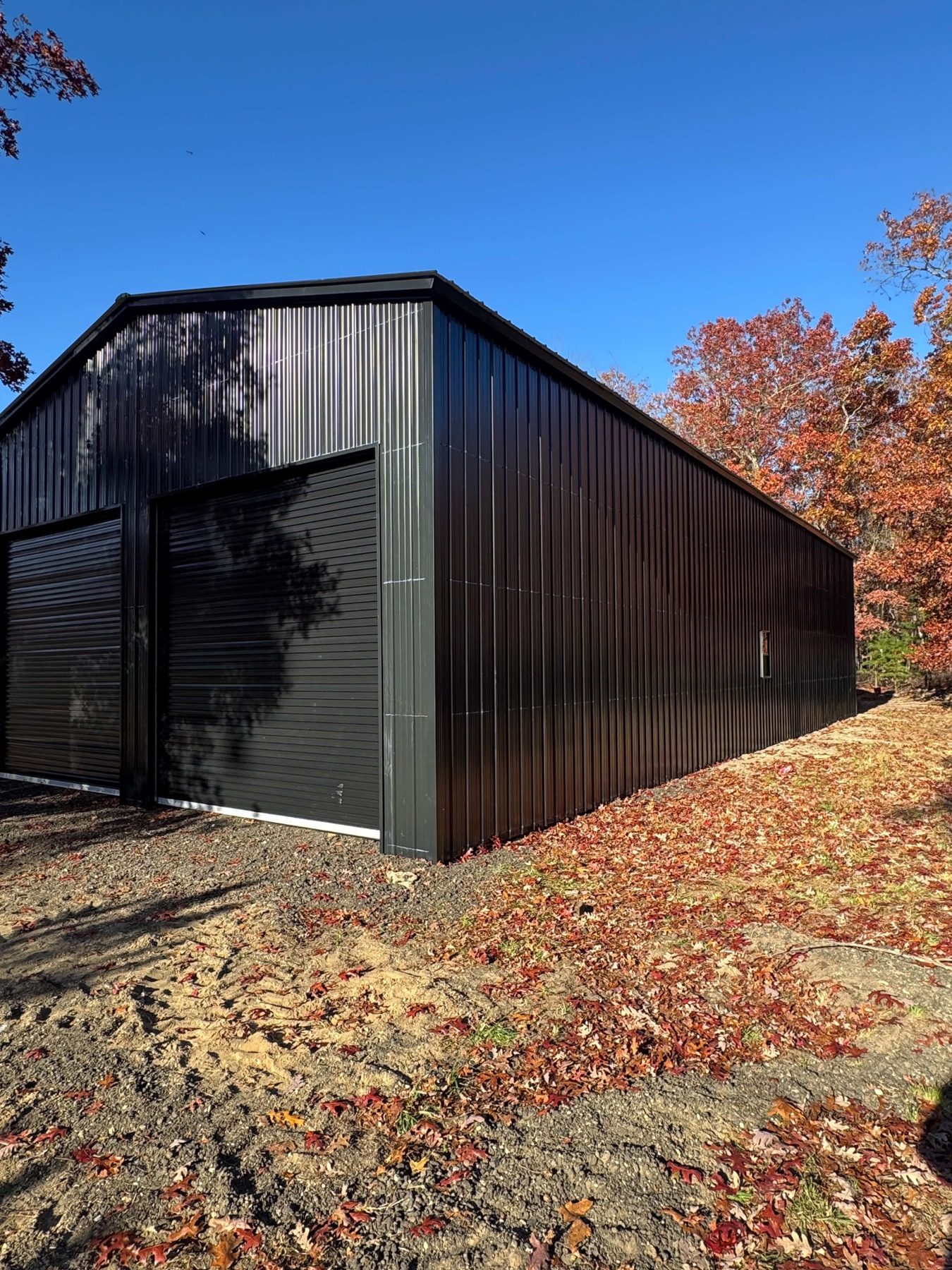
12-gauge steel is thicker and stronger than 14-gauge. For metal building frames, 12-gauge tubing has about a 0.109-inch wall versus about 0.083 inch for 14-gauge, roughly 30% more steel. 14-gauge is fine for many carports and smaller buildings in average weather. 12-gauge makes more sense for wider spans, taller walls, enclosed buildings and higher wind or snow ratings.
Gauge is one of the first things people see on a metal building quote, and one of the most confusing. Here is what the numbers mean and how to pick.
What gauge means
Steel gauge is a thickness number, and it runs backwards: the lower the number, the thicker the steel. So 12-gauge is heavier than 14-gauge, and 26-gauge roof panels are heavier than 29-gauge panels.
On a metal building quote you will usually see two gauges:
- Frame (tubing) gauge: the square steel tubing that makes the legs, trusses and bows. This is the 12 vs. 14 choice.
- Panel gauge: the ribbed sheets on the roof and walls. Many manufacturers use 29-gauge panels, with 26-gauge as an upgrade.
See what every part is called in our metal building parts guide.
12-gauge vs. 14-gauge at a glance
| 14-gauge frame | 12-gauge frame | |
|---|---|---|
| Tube wall thickness | About 0.083 in. | About 0.109 in. |
| Strength | Good for many carports and small buildings | Stronger, stiffer frame |
| Common uses | Open carports, smaller garages, average weather | Wider and taller buildings, enclosed garages and shops, barns, higher wind and snow ratings |
| Cost | Lower | Higher, because there is more steel |
Thickness figures are standard steel tube wall thicknesses by gauge. Exact sizes vary a little by manufacturer.
When 12-gauge is worth it
- Wider or taller buildings. Longer spans and taller legs put more load on each frame.
- Enclosed buildings. Walls catch wind that an open carport lets pass through.
- Higher wind or snow ratings. If your county requires a higher rating, the building may need heavier tubing, closer frame spacing or both.
- Heavy use. Shops, barns and buildings that will hold equipment for decades.
When 14-gauge is enough
For a lot of open carports and smaller buildings in normal conditions, 14-gauge frames do the job and keep the price down. What matters most is that the building is certified for your location’s wind and snow loads and anchored correctly.
Gauge is only part of the strength
A building’s strength comes from the whole system, not one number. Certification depends on the tubing gauge, how far apart the trusses or bows are spaced, the bracing and the anchors. A 14-gauge frame with closer spacing and good bracing can be certified for loads that a poorly spaced frame cannot. That is why we look at the engineered drawings, not just the gauge, when we compare buildings. Learn more about wind and snow load ratings and how buildings are anchored.
Questions to ask on any quote
- What gauge is the frame tubing, and what gauge are the panels?
- What is the truss or bow spacing (on center)?
- What wind speed and snow load is the building certified for, and does that meet my county?
- Are engineered drawings included for the permit?
- What anchors are included, and for what surface (concrete, gravel or ground)?
Comparing more than one quote? Use our line-by-line quote checklist, and see what affects metal building price.
Not sure which gauge you need? Call or text 276-235-1191 with your size and location, or send us a quote request. We will tell you what your county requires.
Ready to price your own? Build & Price Your Building
FAQ
Is 12-gauge or 14-gauge better for a metal carport?
Both are used on carports. 14-gauge is common on open carports in average weather. 12-gauge is stronger and is a good choice for wider or taller carports, enclosed carports, or places with higher wind or snow ratings.
How thick is 12-gauge steel tubing?
Standard 12-gauge steel tube has a wall about 0.109 inch thick. 14-gauge is about 0.083 inch. Exact sizes vary slightly by manufacturer.
Does a lower gauge number mean thicker steel?
Yes. Gauge runs backwards, so 12-gauge is thicker than 14-gauge, and 26-gauge panels are thicker than 29-gauge panels.
Is gauge the same as the wind and snow rating?
No. The rating comes from the whole building: tubing gauge, truss spacing, bracing and anchors. Ask for the certified wind speed and snow load on your quote.
Leave a Reply