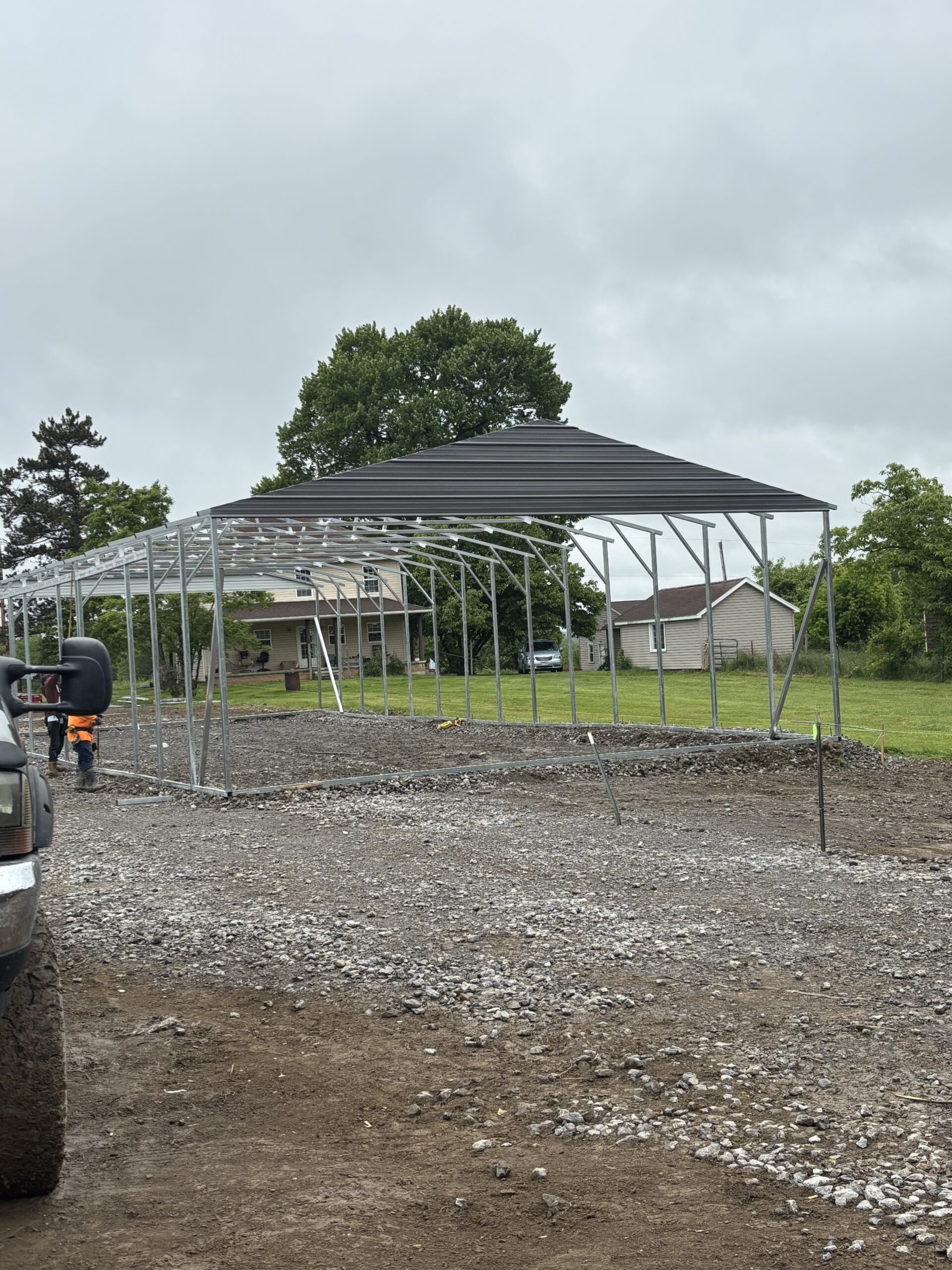
Yes, you can put up a metal building in winter. The steel frame and panels go up fine in cold weather. The hard part is everything under it: frozen ground, mud, and concrete that has to be kept from freezing while it cures. Plan for those, leave room for weather days, and a winter build can work out well.
Once your building is up, here is how to clear snow off a metal carport or building roof safely.
Thinking about a winter build? See our Winter Build Program for the price lock, financing options and install facts in one place.
We build across Southwest Virginia and North Carolina, where winter means hard freezes, a few snows and plenty of mud. Here is what changes when you build in the cold, and how to plan around it.
What winter changes on a metal building job
1. Concrete needs protection
Concrete is the biggest winter issue. According to the National Ready Mixed Concrete Association (NRMCA), fresh concrete freezes at about 25°F, and concrete that freezes early can lose more than half of its strength. It should be protected from freezing until it reaches about 500 psi, which is roughly two days after the pour. Cold also slows everything down: a 20°F drop in concrete temperature roughly doubles the setting time.
That does not mean no concrete until spring. It means the pour is planned around the forecast and the slab is covered and kept warm. See how long concrete should cure before a metal building goes up.
2. Frozen ground and frost depth
Concrete should never be poured on frozen ground. When frozen soil thaws, it settles, and the slab or footers can settle with it. Footers also need to go below your local frost line. In our area that number is set by each locality. For example, the City of Galax uses 18 inches and the Town of Christiansburg uses 24 inches. Read more in our frost depth guide, and check your county’s number before anyone digs.
3. Mud and delivery access
Winter rain, snowmelt and freeze-thaw cycles turn a soft site into mud. Delivery trucks and equipment need a firm path to the building spot, and grading is hard to do well on wet, half-frozen dirt. A graded, compacted pad with good drainage makes a winter install much easier. See our site grading guide and how to prepare your site. Want us to handle it? See our site grading service.
4. Short days, wind, snow and ice
Shorter days mean fewer working hours. Crews also stop for ice, heavy snow and high wind. Wet or icy steel is slippery, and a roof or wall panel catches wind like a sail. Expect a few weather days and keep the schedule flexible.
5. Permits and inspections
Permit offices stay open all winter, so winter is a good time to get paperwork done. Footer and slab inspections still have to fit around the weather, so build a little extra time into the plan. Our order-to-install timeline shows the usual steps.
How concrete gets poured in cold weather
These are the common cold-weather steps from NRMCA and the American Concrete Institute (ACI):
- Clear snow and ice, and make sure the ground and forms are not frozen.
- Order warmer concrete. The supplier can heat the mix. For slabs under 12 inches thick, NRMCA recommends about 55°F at placement.
- Use accelerating admixtures or high-early-strength cement if needed. These speed up setting, but they do not stop concrete from freezing.
- Cover the new slab with insulated blankets, or tent and heat the area.
- Keep it protected until it reaches about 500 psi, then take the covers off gradually so the surface does not crack from a sudden temperature change.
If you are deciding between a slab and footers, our slab vs. footers guide explains the difference. You can also see our concrete foundations page.
When building in winter makes sense
- You want it ready by spring. Getting permits, site work and the slab done in winter means the building can be up when you need it.
- The ground is already prepped. If the pad is graded and drained, cold weather matters much less.
- Taxes for a business building. For Section 179, the building has to be placed in service (finished and usable) in the tax year. See our Section 179 guide and talk to your CPA.
Winter build checklist
- Get your permit started early.
- Make sure there is a firm, drained path for trucks to reach the site.
- Know your local frost depth before footers are dug.
- Plan the concrete pour around the forecast, with blankets or heat ready.
- Leave room in the schedule for ice, snow and wind days.
- Check your building’s snow load rating for where you live.
- Thinking about using it this winter? See how to heat a metal garage and how to stop condensation.
Planning a winter or early-spring build? Call or text 276-235-1191 with your size and location, or send us a quote request. We will tell you what your site needs before the ground thaws.
Ready to price your own? Build & Price Your Building
FAQ
Can you pour a concrete slab in winter?
Yes, if it is planned for. The ground under the slab cannot be frozen, the concrete should arrive warm, and the new slab has to be kept from freezing until it reaches about 500 psi, which is roughly two days. Insulated blankets, heated enclosures and accelerating admixtures are the usual tools.
How cold is too cold to pour concrete?
The concrete industry treats it as cold weather when the average daily temperature stays under 40°F for more than three days in a row. Fresh concrete freezes at about 25°F. Pours can still happen in cold weather, but they need extra protection, and some days are simply too cold or icy to work.
Can a metal building go up in the snow?
The steel can go up in cold weather, but crews stop for ice, heavy snow and high wind because wet or icy steel is slippery and panels catch wind like a sail. Plan on a few weather days in the schedule.
Is it a good idea to order a metal building in winter?
For many people it is. Ordering in the winter gives time for permits, site work and the slab, so the building can be ready when spring work starts. Ask about delivery and install dates when you get your quote.
Leave a Reply