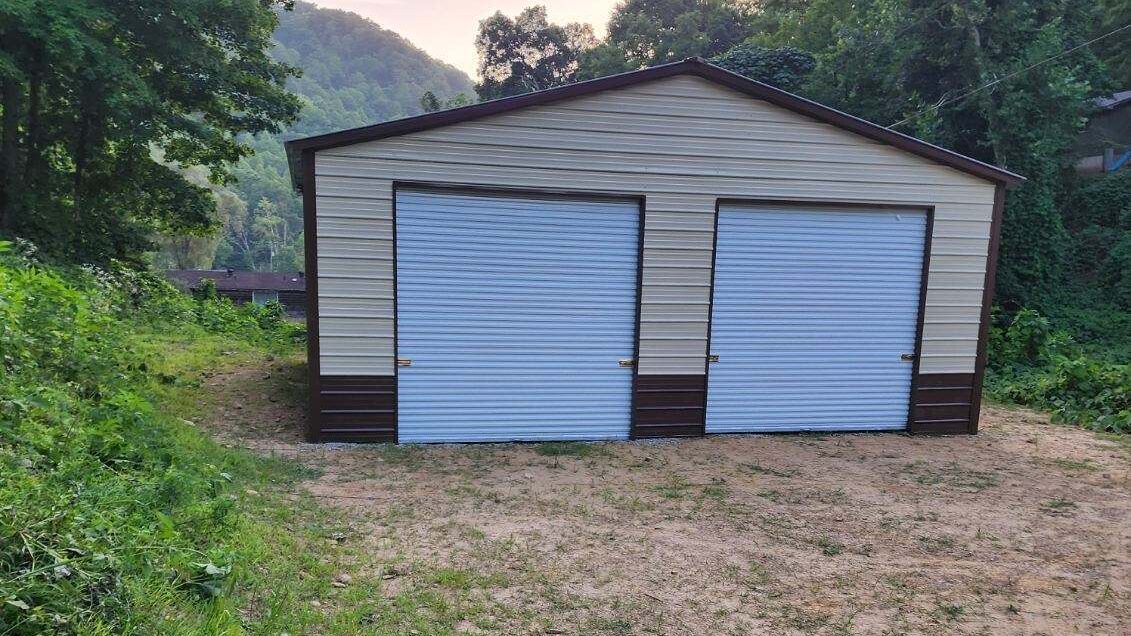
Usually, yes. In North Carolina, a metal garage, shop, barn or enclosed carport almost always needs a building permit from your county. The main exceptions are small buildings with no side or height over 12 feet in counties that use that rule, lightweight portable carports, and buildings used for farming. Electrical work needs a permit no matter what.
To find your county’s permit office, try our metal building permit finder by county.
We build in North Carolina from our home base in Galax, Virginia, just over the state line. Here is how permits work in NC and what to ask your county before you order.
Who decides
State law says no one may start building “any building or structure” without the permits the North Carolina State Building Code requires (G.S. 160D-1110). Your county inspections department, or your town’s if you are inside town limits, enforces that code and issues the permit. Zoning is a separate approval from the planning department.
North Carolina delayed the switch to its 2024 building code in 2025, so the 2018 code stayed in effect in the meantime. Codes change, so ask which edition your county is enforcing when you call.
What usually does not need a building permit
| Building | Building permit? |
|---|---|
| Small building with no side, length or height over 12 feet (in counties that use the 12-foot rule) | Usually no, but zoning approval may still be needed |
| Portable lightweight carport up to 400 sq ft or 12 ft mean roof height | Left out of the NC Residential Code. Check with your county. |
| Farm building on a working farm, not used for sleeping | Generally exempt from the building code. Electrical still needs a permit. |
| Metal garage, workshop, enclosed carport or barndominium shell over 12 feet | Yes |
Counties word the small-building rule a little differently. Wake County, for example, requires a building permit for accessory buildings with any dimension over 12 feet, and Brunswick County uses the same 12-foot test in any direction. Almost every steel garage or shop is bigger than that.
Why the $40,000 rule rarely helps
North Carolina law skips the building permit for some work costing $40,000 or less on a home, farm building or commercial building. People hear about it and assume a smaller metal building qualifies. It usually does not. The exemption does not apply when the work adds load-bearing structure, adds roofing, or adds electrical, plumbing or heating and cooling. A new building does all of that.
Zoning is separate
Even when a building permit is not needed, your county may want a zoning or land use permit. That is where setbacks come in: how close the building can sit to property lines, the road, your septic field and your well. Some counties also ask for a survey when the building lands close to a property line. Our guide to garage setback requirements covers how to check your lot.
The farm building exemption
North Carolina exempts farm buildings from its building code when they are not used for sleeping. A hay barn, equipment shed or livestock building on a working farm usually falls under this. The NC Office of State Fire Marshal is clear that electrical systems are never exempt, so the wiring still gets a permit and inspection.
Counties handle the paperwork differently. Ask what proof of farm use they want before you build. If you are planning a farm building, see our hay storage barn design guide and our barns and ag buildings.
What the county usually wants
- A permit application with the property owner and contractor information
- A site plan showing where the building sits and the distance to property lines
- Building drawings, often engineer-sealed for a metal building
- Foundation details: slab or footers, thickness and footer depth
- Separate electrical, plumbing or mechanical permits if you add them
Wake County notes that structural parts not covered by the residential code must be sealed by a professional engineer or architect. Most metal buildings fall into that group, which is why certified drawings matter.
How certified drawings help
Our buildings come with engineered drawings certified for your county’s wind and snow loads. That is usually the piece that holds up a permit, and we can get it to you early so you are not waiting on paperwork. More on what those ratings mean: wind and snow load ratings explained.
Tips that save time
- Call your county inspections office before you order and ask what you need to permit your size of metal building at your address.
- Ask about setbacks so you know exactly where the building can sit.
- If the building is for farm use, ask what proof of farm use they accept.
- Plan your wiring early. The electrical permit is separate, and our guide to wiring a metal garage covers the basics.
- Tell us what the county said. We will match the foundation to their requirements.
North Carolina counties near us
From Galax we are a short drive to Alleghany County (Sparta), Surry County and Mount Airy, Ashe County, Watauga County and Boone, Wilkes County, Stokes County and Yadkin County. See every area on our North Carolina service page. Building on the Virginia side? Read Do You Need a Permit for a Metal Building in Virginia?. Heading into Tennessee? See Do You Need a Permit for a Metal Building in Tennessee?.
Common Questions
Do I need a permit for a metal carport in North Carolina?
Usually, yes, for a permanent anchored carport. The NC Residential Code leaves out only portable lightweight carports up to 400 square feet or 12 feet of mean roof height. Many counties also skip the building permit when nothing is over 12 feet in any direction. Anything bigger normally needs a permit, and zoning approval may be needed either way.
What size building can I put up without a permit in NC?
Many North Carolina counties do not require a building permit when no side, length or height is more than 12 feet. Past that, plan on a permit. The exact rule depends on your county, and a zoning permit can still be required for small buildings.
Do farm buildings need a permit in North Carolina?
Buildings used for farming that are not used for sleeping are generally exempt from the NC building code. Wiring is the exception: electrical work still needs a permit and inspection. Ask your county what proof of farm use it accepts before you build.
Does the $40,000 permit exemption cover a new metal building?
Usually not. State law skips the permit for some work costing $40,000 or less, but not when the work adds load-bearing structure, new roofing, or new electrical, plumbing or HVAC. A new building adds all of those, so the exemption rarely applies.
Do I need a permit to run electric to my metal building?
Yes. Electrical work is not exempt in North Carolina, even on farm buildings. A licensed electrician normally pulls the electrical permit and the county inspects the work. Our wiring guide explains what to plan for.
Can you help with the permit for my building in North Carolina?
Yes. Our buildings come with engineered drawings certified for your county’s wind and snow loads, which is usually the piece a permit office asks for. Tell us what your county needs and we will match the foundation to it. See our permit help page.
Sources
- N.C. General Statutes § 160D-1110, Building permits
- Wake County: Build an Accessory Building
- Brunswick County: Guide to Accessory Structures
- NC Office of State Fire Marshal: 2018 NC Residential Code amendments
- NC Office of State Fire Marshal: Farm buildings guidance
- NC Office of State Fire Marshal: 2024 building code delay (April 2025)
Ready to price your building?
Call or text 276-235-1191, or send us the size, location and what it is for. We will come back with a real number.
Call 276-235-1191 for a Free Quote Build & Get a Quote Text Us
Leave a Reply