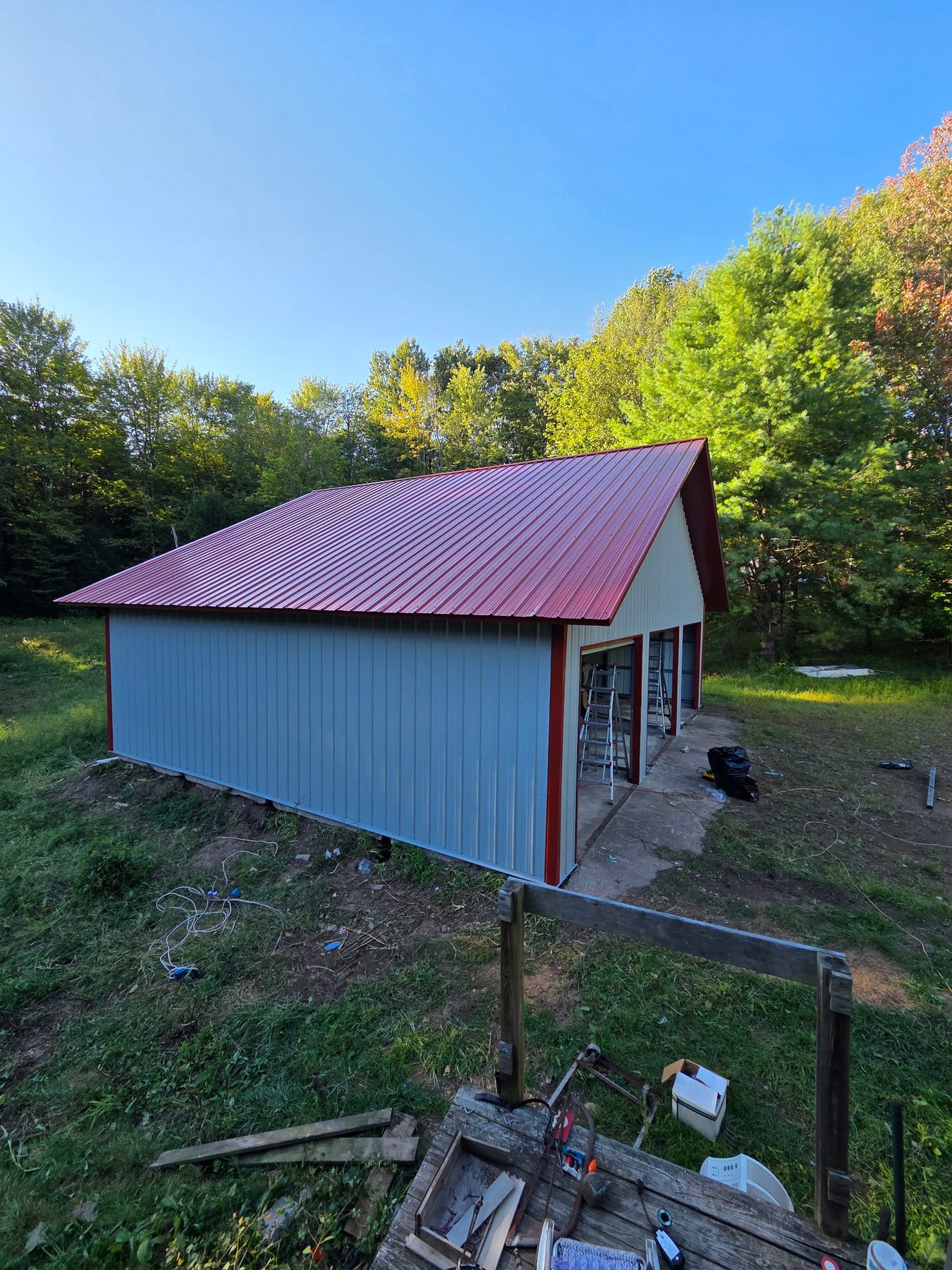
Most of the time, a vertical-roof metal carport or building sheds snow on its own, and you can leave it alone. If heavy, wet snow or ice is building up, clear it from the ground with a plastic (non-metal) roof rake, leave a couple of inches on the roof, and never climb onto a snowy steel roof.
Winter storms in the Blue Ridge can drop a lot of heavy, wet snow fast. This guide covers how much that snow weighs, how to tell when a roof is carrying too much, and how to get it off without hurting yourself or the building.
How heavy is snow on a roof?
Snow weight changes a lot depending on how wet it is. FEMA’s Snow Load Safety Guide gives these numbers:
| What’s on the roof | About how much it weighs |
|---|---|
| 1 foot of light, dry fresh snow | 3 pounds per square foot (psf) |
| 1 foot of wet, heavy fresh snow | 21 psf |
| 1 inch of ice | a little under 5 psf |
| 1 foot of ice | about 57 psf |
The big takeaway: ice and wet snow are the problem, not a fluffy dusting. FEMA also notes that East Coast snow tends to be wetter and denser than snow out West.
For a sense of scale, the City of Galax lists a 30 psf ground snow load for homes and garages under Virginia’s 2021 codes. Your building’s actual rating is on its engineered drawings. Our wind and snow load ratings guide explains what those numbers mean and why a certified building matters.
Does a metal roof shed snow on its own?
Often, yes. On a vertical roof, the panels run from the peak down to the eaves, so snow and rain slide straight off instead of sitting in the grooves. That’s one reason vertical roofs are the best pick for snow country.
FEMA’s guide says steeper roofs shed snow better. Snow reliably slides on roofs steeper than about 30 degrees (a 6:12 to 7:12 pitch), though it has been seen sliding off roofs as low as 10 degrees. Lower-slope roofs hold snow longer. FEMA also notes that snow sliding off a higher roof can pile up on a lower one, like a lean-to, and that wind builds drifts.
Sliding snow is good for the roof but can be a hazard below it. A whole sheet can let go at once, so keep people, pets and vehicles out of the drop zone along the eaves.
Warning signs of too much snow
FEMA lists these common signs that a roof is overstressed during a snow event:
- Popping, cracking or creaking noises
- Sagging roof panels or framing
- Bowing trusses or roof members
- Doors or windows that suddenly won’t open or close
- Severe new roof leaks
If you see any of these, FEMA’s advice is to get everyone out of the building right away and have a qualified professional, such as a structural engineer, inspect it. Don’t go inside to move things out first.
How to clear snow safely: a checklist
These steps follow FEMA’s Snow Load Safety Guide. The safest method is to work from the ground.
- Stay on the ground. Use a roof rake with a long handle. A snowy steel roof is slick, and falls are the biggest danger.
- Use plastic, not metal. Metal rakes and shovels can scratch or dent the panels. Never chip at ice with picks or other sharp tools.
- Leave about 2 inches. Scraping down to bare metal can damage the roof. FEMA recommends leaving at least 2 inches of snow.
- Take the drifts first. Clear the deepest piles, like where a lean-to meets the main roof, before the rest.
- Keep it even. Don’t clear one side of the roof and leave the other side loaded. Uneven loads are harder on a building.
- Watch for sliding snow and icicles. Snow can slide at any moment while you rake. Stand back from the eave, and have someone keep others away.
- Don’t pile it where it causes trouble. Keep cleared snow away from doors, downspouts and vents.
- No machines. Snow blowers and other powered tools on the roof can damage it.
- Check afterward. Look for bent panels, loose screws, or anything that looks out of place.
If the roof is too tall to reach from the ground, or you’re seeing warning signs, hire a pro instead of climbing up.
Before the next storm
- Check your anchors. A building that can handle snow still needs to be held down. See how metal buildings and carports are anchored.
- Keep gutters and downspouts clear so melting snow has somewhere to go. Our metal building gutters guide covers the basics.
- Watch for dripping inside. Cold steel plus warm air inside can cause “sweating” that looks like a leak. Here’s how to handle metal building condensation.
- Do a quick walk-around. Our metal building care guide has a simple checklist for every season.
Planning a building for snow country?
If you’re buying a new carport or building, ask about three things: a vertical roof, the snow load it’s certified for, and the frame. Our buildings are certified for local wind and snow loads, and engineered drawings are available. If you already have an open carport, you can also enclose a carport later to keep snow off what’s parked under it.
Want a building made for our winters? Call or text 276-235-1191, or send us a quote request. See our carports and RV covers or popular building sizes.
Ready to price your own? Build & Price Your Building
FAQ
Should I remove snow from my metal carport roof?
Usually not. A vertical metal roof often sheds snow on its own. Clear it if heavy, wet snow or ice is building up, or if you notice warning signs like sagging or creaking.
Can I use a metal roof rake on a metal roof?
It’s better not to. FEMA recommends a non-metal snow rake, because metal rakes can damage roofing. Never chip at ice with sharp tools.
How much does a foot of snow weigh on a roof?
According to FEMA, about 3 pounds per square foot for light, dry snow up to about 21 pounds per square foot for wet, heavy snow. One foot of ice is about 57 pounds per square foot.
Should I clear all the snow off the roof?
No. FEMA recommends leaving at least 2 inches so you don’t damage the roof surface. Clear both sides evenly.
What are signs a roof has too much snow?
Popping or creaking sounds, sagging panels or framing, bowing trusses, doors that stick, and new leaks. If you see them, get out of the building and call a professional.
Leave a Reply