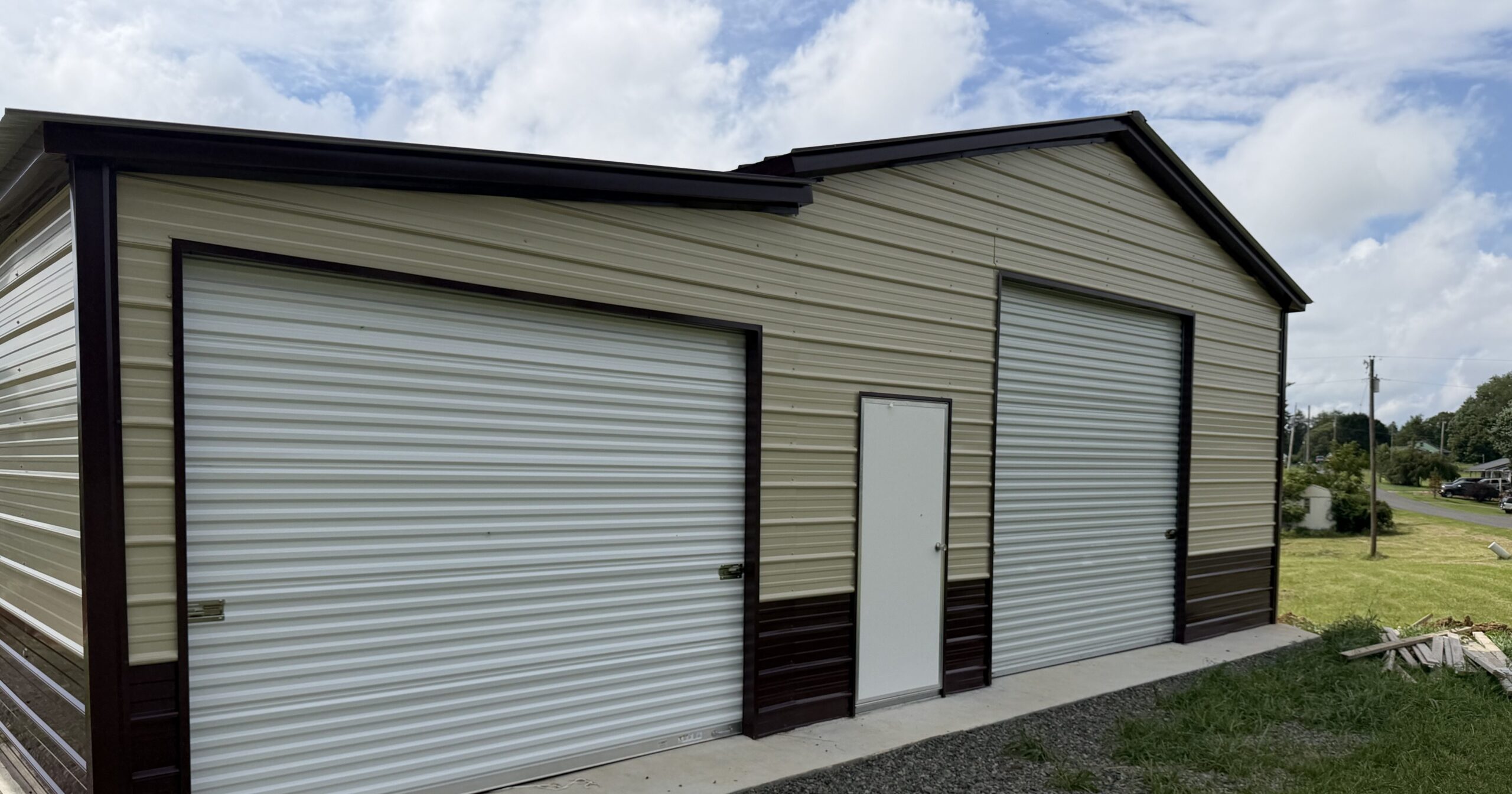
Two quotes for the same size building can be $3,000 apart, and most of the time they are not quoting the same building. One has heavier steel, closer frames and a certified rating for your county. The other leaves out the anchors, the site prep or the concrete and hopes you do not notice until install day.
This is the checklist we use when someone asks us to look over a quote. Use it on ours too.
Print it: Download the 2-page quote comparison checklist (PDF). Page 2 is a side-by-side grid for up to three quotes.
The short version
A fair comparison has three parts: the same building (size, steel, frame spacing, certification), the same scope (site prep, concrete, anchors, delivery, install) and the same terms (deposit, refunds, timeline, warranty). If any of those three do not match, the cheaper quote is not cheaper yet.
1. The building itself
- Size, written as width × length × height. Confirm the height is the sidewall (leg or eave) height, not the peak. Our eave height guide shows the difference.
- Roof style. Standard, boxed-eave or vertical. Vertical costs more because it needs extra roof framing, and it sheds rain and snow best. See the three roof styles.
- Frame gauge. 14-gauge and 12-gauge are the common choices. A lower number means thicker steel, so 12-gauge is the heavier frame.
- Sheet metal gauge. 29-gauge and 26-gauge are common. Again, the lower number is the thicker panel.
- Frame spacing. How far apart the trusses or bows are, usually 4 or 5 feet on center. Closer spacing usually means a stronger building, and it is one of the first things cut to win a price war.
- Certification for your address. The quote should name the wind speed (mph) and snow load (psf) the building is engineered for, and those numbers should meet what your county or city requires. Ask for the engineered drawings. More on that in wind and snow load ratings explained.
- Doors, windows and openings. Count, size and type: roll-up doors (width × height), walk-in doors, windows, frame-outs.
- Trim, colors and extras. Trim package, wainscot, gutters, insulation and anchors should each be a line, not an assumption.
2. The foundation and the site
- Who prepares the site. Clearing, grading and compaction. Most manufacturers require a site that is level within a few inches, and some quotes quietly make that your job.
- Concrete, if it is included. Slab thickness (a 4-inch slab is common), footer size and depth, gravel base, reinforcement (rebar, wire or fiber) and control joints. Our guide on slab vs. footers explains each.
- Frost depth. Footers need to go below the frost line your locality sets. In Galax, for example, that is 18 inches.
- Anchors. Type and count, matched to what the building sits on: concrete, asphalt or ground. See anchor types.
- Vapor retarder. Required under heated slabs in Virginia. Optional for unheated garages and carports, but you cannot add it after the pour.
3. The money
- Deposit: how much, when, and is any of it refundable? Get it in writing. Watch for big deposits paid long before anything is ordered.
- When the balance is due. At delivery, at install, or in stages tied to work you can see.
- Taxes and fees. Sales tax, delivery, installation, permit fees and engineering drawings. Some quotes leave these off the first page.
- Financing terms. For rent-to-own: down payment, monthly payment, term, early payoff rules and what buildings qualify. Ours is laid out on the rent-to-own page.
- Price lock. How long the quoted price holds, and what it takes to lock it. Steel and freight prices move.
4. Timeline and accountability
- Lead time. Weeks from order to install, what can delay it, and how you will be kept posted.
- Who installs. The seller’s own crew, the manufacturer’s crew, or a subcontractor nobody has met.
- License and insurance. Ask for the contractor license number and check it. In Virginia you can look it up on the DPOR license lookup.
- Warranty, in writing. Frame, panels and workmanship are often three different warranties from two different companies.
- Permits. Who pulls the permit, and who supplies the drawings your building office asks for.
- Changes and cleanup. How change orders are priced, and who hauls off packaging and scrap.
Side-by-side grid
Fill this in for each quote. Any blank cell is a question to ask before you sign.
| Line to compare | Quote A | Quote B | Quote C |
|---|---|---|---|
| Size (W × L × sidewall height) | |||
| Roof style | |||
| Frame gauge / sheet gauge | |||
| Frame spacing | |||
| Certified wind (mph) / snow (psf) | |||
| Doors and windows | |||
| Site prep included? | |||
| Concrete included? (slab, footers) | |||
| Anchors (type, count) | |||
| Delivery and install included? | |||
| Deposit and when the balance is due | |||
| Taxes, permits and drawings | |||
| Lead time | |||
| Who installs | |||
| License number checked | |||
| Warranty (frame, panels, labor) | |||
| Total for the whole job |
Red flags on a quote
- No certification numbers. “Certified” with no wind speed, no snow load and no state on the drawings.
- A price far below everyone else with no explanation of what is different.
- No foundation spec, or “level site required” with no say on who makes it level.
- Pressure to sign today to hold a price or a “sale.”
- No reviews showing on the company’s Facebook page. John’s rule: if reviews are not showing, move on, no matter what they tell you. Here is the full 4-step check, and more on metal building scams.
How we quote
We put the building, the concrete and the site prep on one written quote, line by line, so you can hold it up against anyone else’s. Concrete has its own payment schedule: 10% of the job subtotal at signing, 35% of the remaining balance at the footer pour and 65% at the slab pour. If someone else’s quote is a better fit for you, we will tell you that too.
Common questions
Why are two quotes for the same size so far apart?
Usually because they are not the same building or the same job. Frame gauge, frame spacing, certification, anchors, site prep and concrete are the usual differences. Line them up with the grid above and the gap usually explains itself.
Is 12-gauge framing worth it over 14-gauge?
It depends on the size, the loads where you live and how you will use the building. 12-gauge is heavier steel. Ask each company which gauge the engineered drawings call for at your address, and compare quotes with the same gauge.
Should a quote include the concrete?
If you need a slab or footers, the job is not priced until the concrete is. Comparing a building-only quote against a turnkey quote makes the building-only one look cheaper than it is. See what turnkey really means.
What should I bring when I ask for a quote?
The size you want, what it is for, where it is going (town or county), and a few photos of the spot. Photos of the site tell us about slope, access and drainage before anyone drives out.
Want a second set of eyes on a quote? Text a photo of it with your site photos to 276-235-1191, or send us a quote request. We will tell you what is missing, even if you buy somewhere else.
Sources and further reading
- How To Avoid a Home Improvement Scam, Federal Trade Commission
- License Lookup, Virginia Department of Professional and Occupational Regulation
- Consumer Protection Section, Office of the Attorney General of Virginia
- Information for Designers: Local Design Criteria (PDF), City of Galax
- Virginia Residential Code 2021, Chapter 5: Floors, via UpCodes